

Product Engineering Services: From Concept to Prototyping
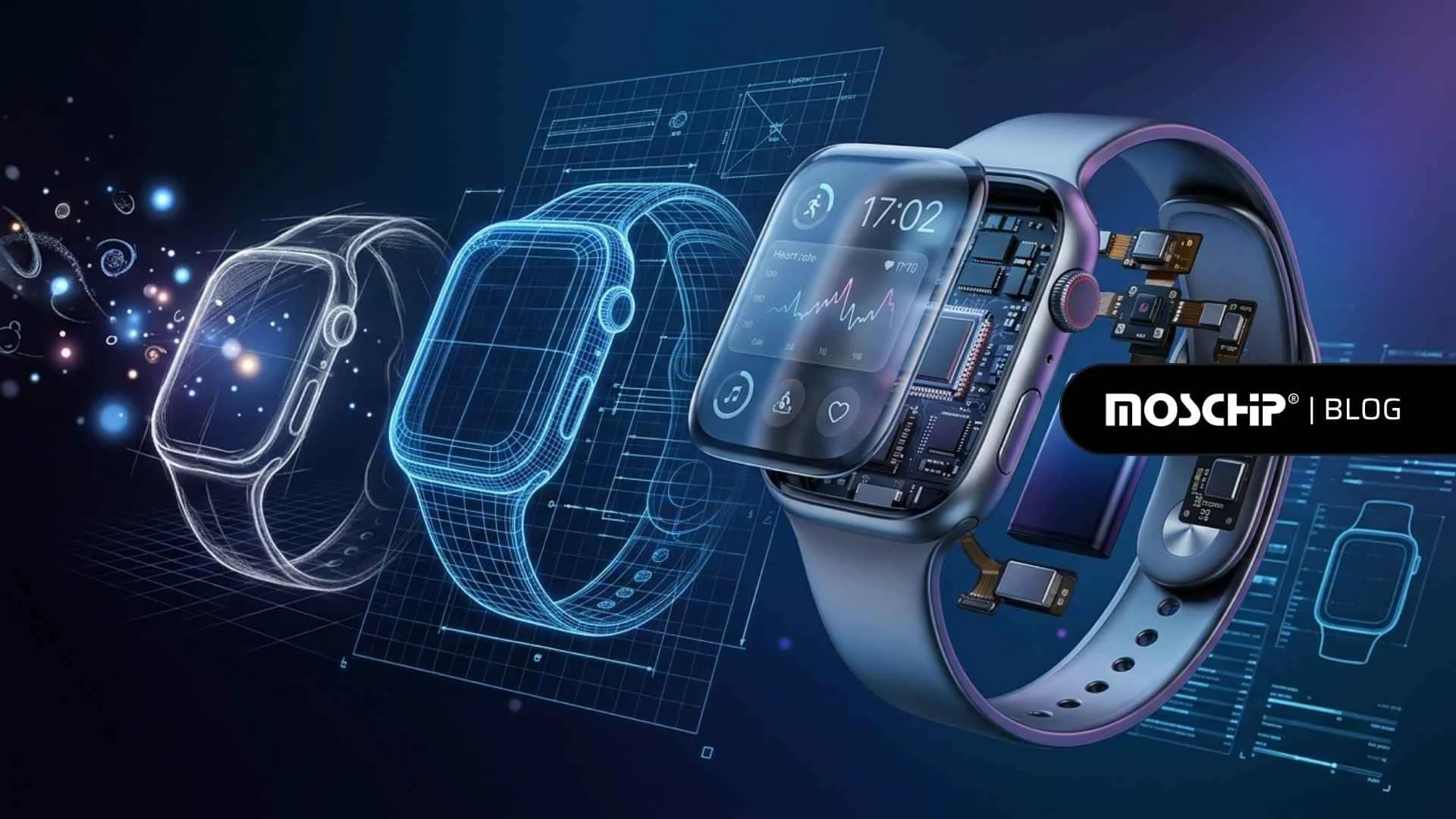
In the age of connected devices, where time-to-market and seamless user experience define product success, engineering is no longer a linear execution function. It is a tightly orchestrated, multi-layered discipline.
This complexity has made product engineering services a foundational capability for modern product companies. Instead of fragmented development across teams, the need is to enable a unified approach right from early ideation to sustained product evolution in the field.
Product Engineering Services (PES) encompass the end-to-end development and lifecycle management of products that combine physical systems with digital and AI components.
For product companies, PES addresses critical execution challenges:
Without a structured PES approach, products often face delays, redesign costs, and inconsistent user experiences. With it, product engineering becomes a continuous, feedback-driven system rather than a one-time delivery effort.
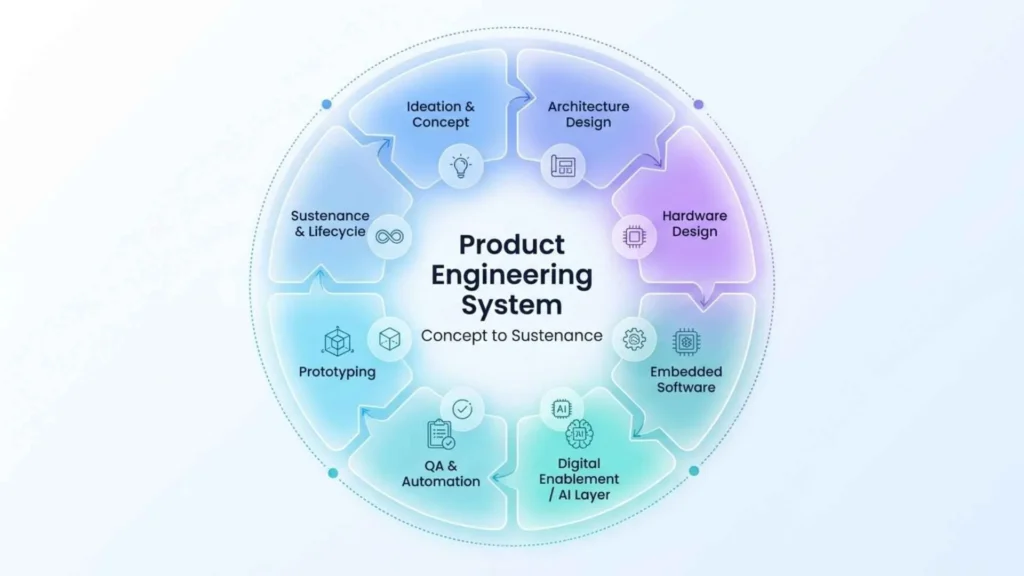
The lifecycle begins not with design, but with structured thinking. It begins with the Ideation phase which is not an isolated brainstorming activity rather it is a cross-functional convergence of business vision, engineering feasibility, and user context and experience.
Workshops at this stage bring together product managers, hardware engineers, software architects, and domain experts to translate abstract ideas into technically grounded concepts. The focus is on identifying viable use cases, mapping functional requirements, and evaluating constraints early, whether they stem from hardware limitations, latency expectations, or integration complexity.
What distinguishes effective ideation is its forward-looking nature. Decisions are not made in isolation but are evaluated against how they will impact architecture, cost, scalability, and maintainability downstream. In doing so, the process moves beyond ideation into conceptualization where abstract ideas are systematically shaped into clearly defined product constructs. Core features, user flows, and system boundaries begin to take form, ensuring the idea evolves into something tangible, structured, and ready for engineering validation.
Once the concept is validated, architecture is the next phase where the concept transforms into a blueprint that governs every subsequent decision. It defines how the product will operate across environments, how data will move, and how different components will interact.
At this stage, hardware-software co-design becomes critical. Instead of treating hardware and software as sequential efforts, both are designed in tandem ensuring optimal partitioning of functionality, efficient resource utilization, and reduced integration complexity later in the lifecycle.
A well-engineered architecture establishes clear boundaries between device, edge, and cloud layers, while ensuring seamless communication between them. It also embeds security at every level and introduces modularity, allowing the system to evolve without requiring fundamental redesign.
More importantly, architecture is created anticipating scale. Whether it is onboarding thousands of devices, handling real-time data streams, or enabling new feature layers, the architectural foundation determines whether the product can grow without friction. Poor architectural choices at this stage often surface later as costly re-engineering efforts.
Hardware design translates architectural intent into a physical system that must perform reliably under real-world conditions. This phase goes beyond just schematic creation, as it is a careful balance between performance, cost, and manufacturability.
Component selection plays a critical role, not only in defining system capabilities but also in optimizing the Bill of Materials (BoM). Even marginal inefficiencies in BoM can significantly impact production costs at scale. At the same time, considerations such as power consumption, thermal behavior, and signal integrity must be addressed to ensure long-term reliability.
Design for manufacturability is equally important. A product that performs well in a lab but cannot be produced efficiently at scale introduces operational risk. Hardware design, therefore, must align closely with production realities from the outset.
If hardware forms the body of the product, the software layer defines its behavior. The embedded software layer brings determinism, control, and responsiveness to the device.
This layer involves developing firmware tightly coupled with hardware, while selecting and integrating the appropriate operating system layer ranging from bare-metal implementations and real-time operating systems (RTOS) to embedded Linux or Android-based systems, depending on device complexity and use case. These environments manage concurrency, scheduling, and resource allocation, ensuring predictable system behavior.
Communication protocols are implemented to enable interaction with sensors, peripherals, and external systems, while ensuring data integrity and low latency. This tight coupling reflects earlier hardware-software co-design decisions, where functionality is deliberately partitioned to maximize performance, efficiency, and system responsiveness.
The complexity here lies in maintaining efficiency within constrained environments. Memory, compute, and power limitations require highly optimized code, especially when devices are expected to perform reliably over long durations. Additionally, mechanisms such as secure boot and over-the-air updates must be embedded early to support long-term lifecycle management.
A modern product is almost never standalone. It is part of a connected ecosystem. Digital engineering provides the much-needed digital backbone for the connected ecosystem. It extends the product beyond its physical boundaries, enabling interaction, visibility, and control.
This layer introduces connectivity frameworks that allow devices to communicate with cloud platforms and user interfaces. It also enables remote device management, where configurations can be updated, performance can be monitored, and issues can be diagnosed without physical intervention.
User-facing applications and dashboards become the primary interface through which value is delivered. At the same time, over-the-air (OTA) updates/rollbacks ensure that the product can evolve post-deployment. Digital enablement effectively transforms a device into a living system, continuously interacting with users and backend intelligence.
As products become more intelligent, the AI layer introduces the ability to learn, adapt, and assist in making decisions. However, integrating AI into products is not just about building models, it is about making them deployable and efficient within real-world constraints.
This phase involves porting models to edge devices, fine-tuning them with domain-specific data, and optimizing them for latency and resource usage. In many cases, inference must happen in real time, requiring careful balancing between model complexity and performance.
The integration of AI also demands tight coupling with data pipelines, ensuring that models receive relevant inputs and that their outputs can trigger meaningful actions. When executed effectively, this layer becomes a key differentiator, enabling predictive capabilities and intelligent automation within the product. This also plays a key role in elevating user experience.
Quality assurance is not a checkpoint. It is an ongoing engineering discipline embedded across the lifecycle. As products become more complex, manual testing alone is insufficient to ensure reliability.
Automated frameworks are introduced to validate functionality across firmware, applications, and APIs. Hardware-in-the-loop testing enables system-level validation, ensuring that interactions between physical and digital components behave as expected.
Continuous integration and deployment pipelines further ensure that every update is tested rigorously before release. This not only reduces regression risks but also enables faster iteration cycles, allowing teams to innovate without compromising stability.
Prototyping serves as the critical bridge between design and production. It is where assumptions are tested, integrations are validated, and potential failures are uncovered.
Rather than a one-time activity, prototyping is iterative. Each version refines the product, addressing issues related to hardware-software interaction, performance, and usability. It also provides valuable insights into manufacturability and deployment readiness.
By the time a product moves toward production, prototyping ensures that risks are minimized and that the system behaves predictably under real-world conditions.
The true test of a product begins after deployment. Sustenance focuses on ensuring that the product continues to perform, adapt, and remain secure throughout its lifecycle.
This involves continuous monitoring of device health, managing firmware and software updates, and responding to issues observed in real-world environments. Security and compliance also require ongoing attention, as new vulnerabilities and regulatory requirements emerge over time.
End-of-Life (EoL) management by product engineering services company is typically addressed when risks begin to materialize such as component obsolescence or supply chain constraints. Without early integration into the engineering lifecycle, this can result in reactive redesigns and avoidable costs. Embedding EoL planning upfront enables better component strategies, improved lifecycle visibility, and smoother product transitions.
Ultimately, sustenance transforms the product into a continuously evolving system rather than a static deliverable, ensuring long-term reliability and relevance.
Product engineering companies like MosChip are bringing together solution accelerators, which will not only help with IoT enablement but also bringing intelligence to the edge and cloud layers, faster than before. The MosChip DigitalSky GenAIoT Accelerator comes with a suite that helps with IoT integration and connectivity, followed by cognitive intelligence suite with over 100+ pre-built AI models, 50+ edge AI models for various use cases across industries. A unified automation suite provides 10+ automation bots and automation framework that can help accelerate your QA process. And finally, a digital native suite, which enables rapid composition of secure, cloud-native experiences. Ideal for teams delivering control interfaces, user dashboards, and data services at scale.
Keeping the future in mind, MosChip also delivers Agentic AI based solution accelerator, called AgenticSky, which provides pre-built solutions for Agentic AI based devices, systems, and machines across vision, HMI, controllers, and wearables. This enables product development for futuristic systems. All these accelerators are designed to accelerate time to market by at least 40%, shrinking product engineering timelines.
As products become more connected and intelligent, product engineering services must evolve from execution to end-to-end orchestration across hardware, software, and AI. MosChip is driving this shift through integrated engineering and platform-led acceleration. The result is faster time-to-market, scalable architectures, and products designed to continuously adapt. In this landscape, success depends on building not just products but systems that evolve with intelligence.
To know more about our product engineering services capabilities, please do drop us a line.

Smishad Thomas is a Technical Marketing Manager at MosChip. He has over 13 years of experience in technology marketing, branding, and content leadership. He has a keen interest in product engineering and loves developing convincing stories that translates technical innovations into clear, engaging messaging that resonates with business audiences

Nowadays, industries are increasingly relying on real-time data, which is driving the demand for systems that can collect data and…

Most AI systems today are still built with a familiar mindset. Train a model, deploy it on the infrastructure and optimize…

Digital Twin is a dynamic, software-defined representation of a physical product or system that continuously reflects its state, behaviour, and operating context using real-world data…
Engineering teams building connected products spend a significant amount of time solving the same foundational problems…

In today’s time where data is frequently compared to the “new oil”, it is crucial for businesses to adjust their…

Imagine interacting with a product that does not simply respond to commands but understands context, anticipates…
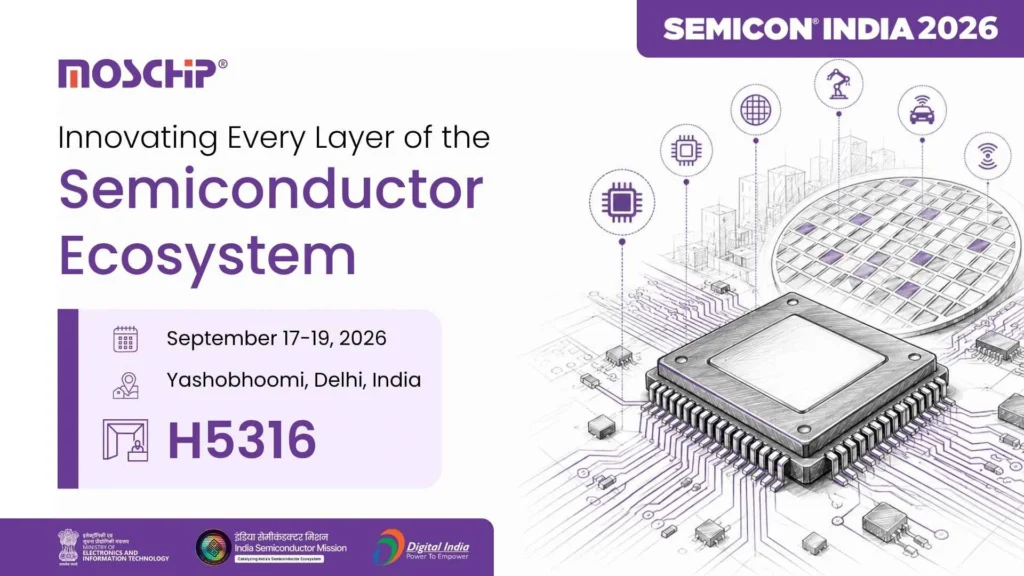
Join us at India’s premier semiconductor ecosystem event – SEMICON India 2026 to explore our comprehensive...
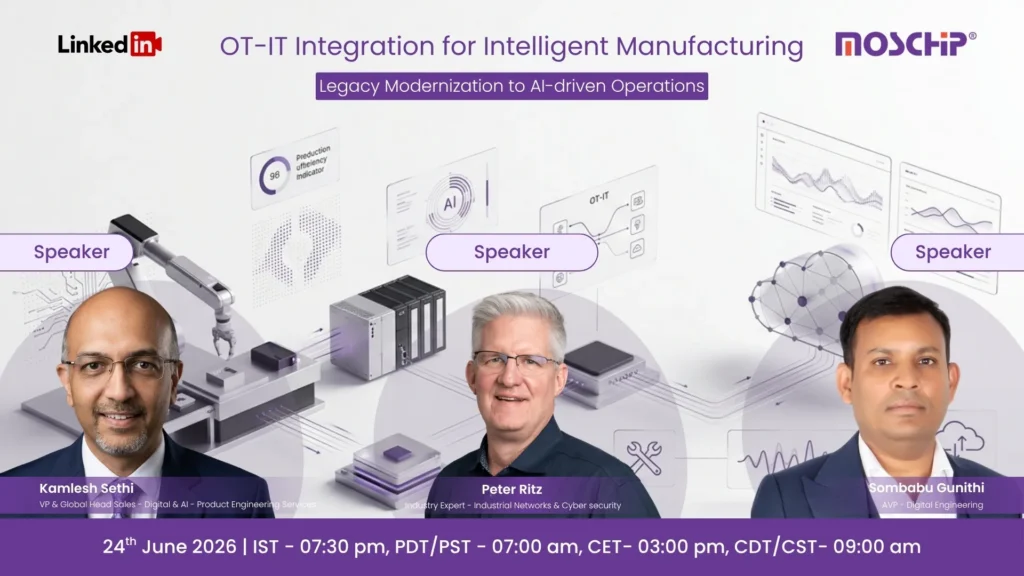
How can manufacturers transform fragmented operational data into real-time intelligence...

Today’s consumer products respond after something has happened. Your wearable tells you your heart rate is elevated.…
The wearable technology industry has undergone a drastic transformation in recent times. Starting with basic…