

PoC vs Prototype vs MVP in Modern Product Engineering Services
Every product begins with an idea, a vision to solve a problem or create something valuable. Teams bring that idea to life through discussions, concept building, and early design thinking.
At this stage, everything looks promising. But as soon as the concept moves closer to execution, one critical question arises: Will this work in the real world?
This is where complexity begins to surface. An IoT product involves systems, integrations, user interactions, and performance expectations that all need to align seamlessly.
That is why having a product engineering services partner is essential. They bring structure to uncertainty, helping teams systematically validate ideas before fully committing to production.
Product engineering teams can support companies from ideation to concept and prototype development, aligning each stage to bring the product to the market earlier.
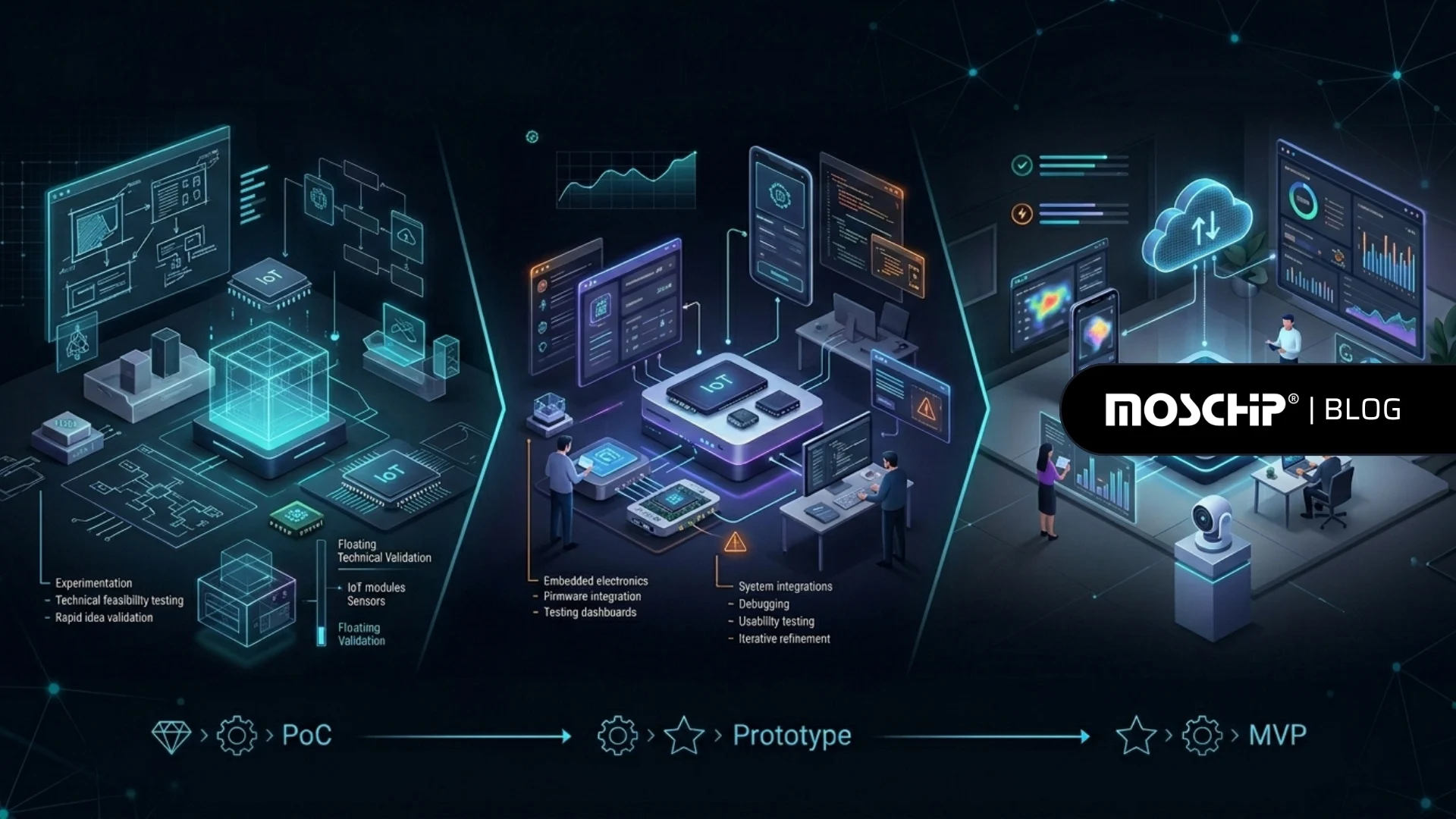
This journey is typically structured across three critical categories: Proof of Concept (PoC), Prototype, and Minimum Viable Product (MVP), where product development companies may utilize one specific stage or all based on the product need. Each is designed to answer a specific question and reduce a distinct type of risk.
This builds clarity before any commitment is made. It makes sure that decisions are backed by evidence rather than assumptions.
And it leads to the most important starting point in product development, answering a simple but critical question. Can the idea be built?
That critical question leads directly to the first stage of the structured validation process. Before investing in full-scale development, teams need to bring the idea closer to technical reality. This is where a Proof of Concept is built to assess technical feasibility.
It is created to answer one straightforward question: whether a specific technology, integration, or core idea can work. The goal is simply to confirm that the idea can work from a technical standpoint.
A PoC is not something users ever see. It is often rough and highly experimental in nature. Teams put it together quickly to pressure test their assumptions and spot technical problems before they scale.
The focus stays completely on reducing engineering risk rather than polishing design or improving user experience.
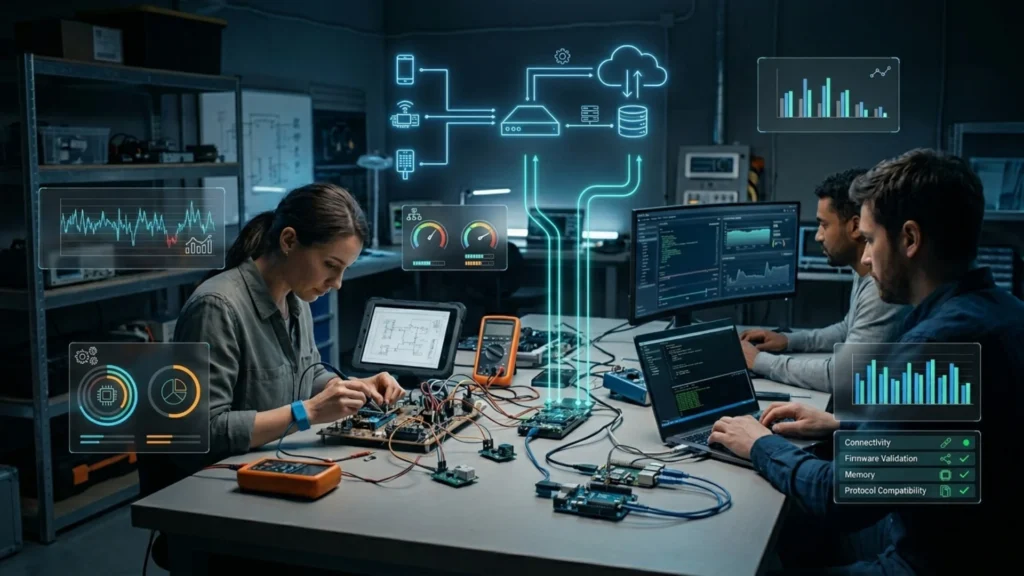
It can include code snippets, scripts, architecture checks, lab tests, or early hardware setups to validate sensors, devices, and physical system integrations. For example, a basic script might check whether a third-party API can consistently pull real-time data across multiple systems without falling apart.
Beyond technical feasibility, the PoC stage also looks at whether the product is easy to use and practical to build. If the hardware, design, or user experience feels too complex, it cannot survive mass production conditions; teams identify and resolve those gaps here in this stage before they grow into more expensive problems.
Once the team knows the idea can work, the focus naturally shifts to a new direction.
The challenge is no longer about whether it can be built. It becomes about how it should be experienced. That shift pushes us into the next stage, where ideas stop sitting on paper and start taking shape.
This is where prototypes come in, and for the first time, things begin to feel real and touchable.
Proof of Concept Scenario
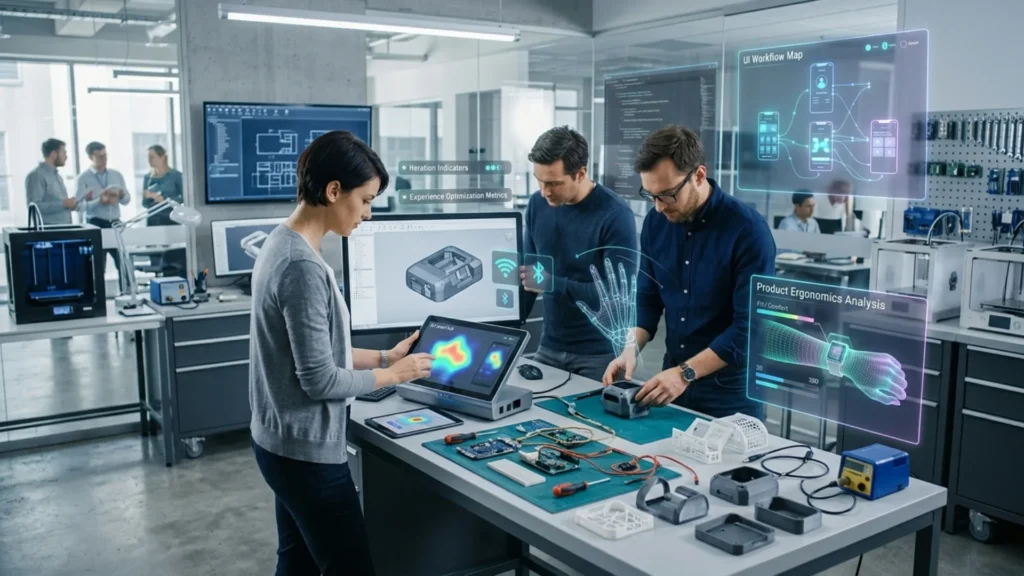
Once we know the product can be built, the focus shifts to the user. Is it usable? It becomes about how easily people can navigate through it, interact with it, and understand it in real-world use. Teams look at whether the layout feels intuitive, the experience is smooth, and the overall flow makes sense. This is where prototypes really start to matter.
A Prototype is an early version of a product used to visualize and test design, functionality, and user interaction before full-scale development begins. It is not limited to simulations.
Prototypes can range from simple visual mockups to partially or fully functional models, depending on what needs to be tested and confirmed.
The main goal is to validate user experience, design assumptions, and stakeholder alignment. This is a step that Product Engineering Services teams treat as non-negotiable before committing to full development.
Some prototypes are clickable interfaces built using tools, while others may include working features that simulate how the final system will function. In industrial settings, prototypes can also take the form of physical or engineering models used to test performance and usability in real conditions.
Prototypes are shared with stakeholders, investors, internal teams, and selected users to collect feedback and sharpen direction.
Once usability is confirmed, the next question becomes very important. Will users adopt it or pay for it?
Prototype Scenario
Once usability and design are confirmed, the focus moves towards delivering a market-ready product. The question now goes beyond internal alignment and enters real-world conditions.
Will users adopt the product, and more importantly, will they find enough value in it to pay for it? This is where the Minimum Viable Product (MVP) becomes critical.
An MVP is a working version of the product built with only the core features needed to solve one real problem. Unlike the earlier stages, it is released to actual users in real environments. The goal is not to be perfect. The goal is to learn through real usage and honest feedback.
MVPs are public-facing and built for early adopters who are open to engaging with products that are still improving.
Their focus is now on gathering feedback based on the performance in real-world environments. This helps teams make iterations based on the feedback and deliver products that are market-ready.
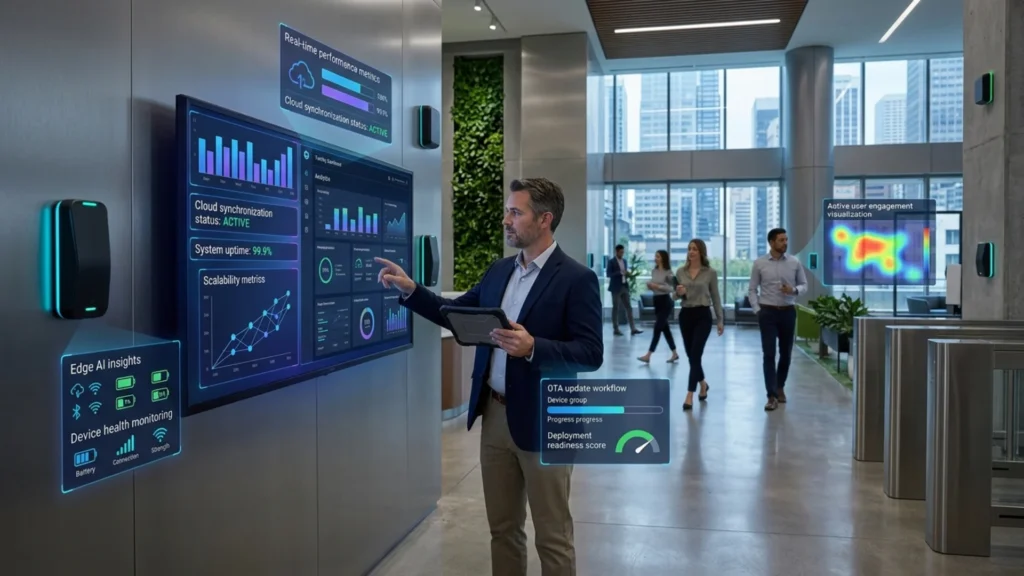
What truly separates an MVP from a prototype is real interaction. Real users engage with it, real situations put it to the test, and real data shapes the decisions that follow.
For any of the stages, whether the PoC, Prototype, or MVP, product engineering companies also take complete ownership of documentation. This includes findings, system references, troubleshooting guides, and deployment procedures, giving teams everything they need to support, scale, and hand off the product confidently.
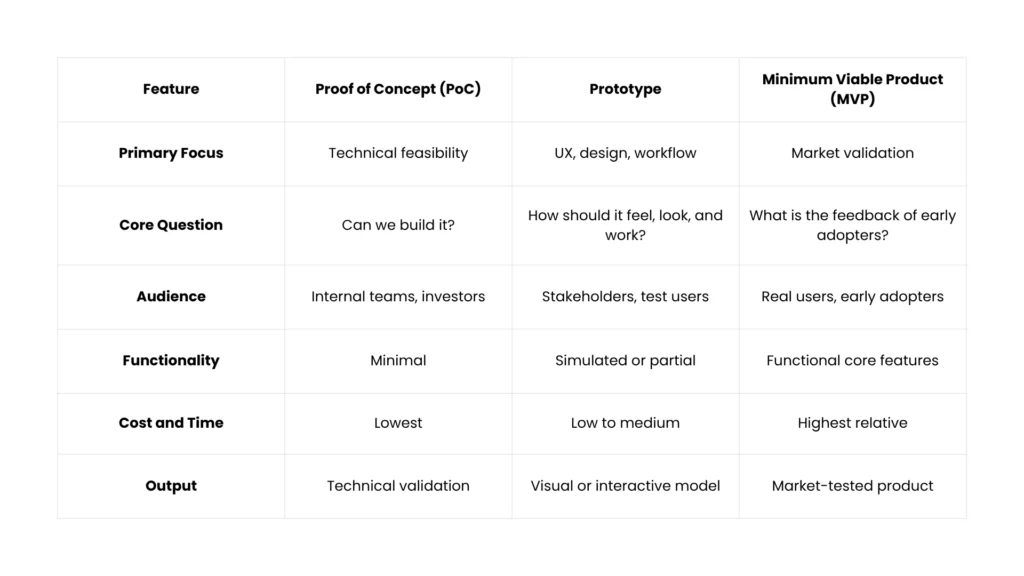
Now that each stage is clearly defined, placing them side by side brings the strategic clarity needed to make better product decisions.
Minimum Viable Product (MVP) Scenario
While these approaches are often used interchangeably, each serves a unique purpose. Viewing them side by side helps teams choose the right method at the right time, reducing risk and improving execution clarity.
Product development companies can strategically use all three stages, or selectively apply any one of them, depending on the specific needs and maturity of the product they are building.
MosChip brings over 25 years of engineering expertise in end-to-end product engineering services, helping transform ideas from early validation into market-ready solutions. Backed by 500+ successful Product Engineering Services (PES) projects, MosChip has consistently enabled organizations to reduce technical risk, validate usability, and confirm market demand early in the development lifecycle.
With deep expertise spanning hardware design, embedded software, digital engineering, and AI engineering, MosChip empowers teams to innovate faster, make informed investment decisions, and build scalable products across industrial and technology-driven domains.
To know more about MosChip’s capabilities, drop us a line, and our team will get back to you.

Darshil is a Marketing professional at MosChip creating impactful techno-commercial writeups and conducting extensive market research to promote businesses on various platforms. He has been a passionate marketer for more than four years and is constantly looking for new endeavors to take on. When He’s not working, Darshil can be found reading and playing guitar.
The drive for real-time intelligence at the edge is revolutionizing device design and deployment in today’s quickly changing embedded environment….

In today’s time where data is frequently compared to the “new oil”, it is crucial for businesses to adjust their…
The path for a product doesn’t stop once it is ready to be launched. Whether it is a semiconductor powering a mission-critical…
In the age of connected devices, where time-to-market and seamless user experience define product success, engineering is no longer…
Industrial automation and digital manufacturing are evolving rapidly as Edge AI models are reducing…
Most AI systems today are still built with a familiar mindset. Train a model, deploy it on the infrastructure and optimize…
Join us at India’s premier semiconductor ecosystem event – SEMICON India 2026 to explore our comprehensive...

FPGA products are no longer just about getting the RTL right. Building a production-ready FPGA platform...
Today’s consumer products respond after something has happened. Your wearable tells you your heart rate is elevated.…

AI hardware has developed fast. Every new product comes with promises of more power, bigger memory, or better energy use...