Cyber Resilience Act (CRA) and the Future of Connected Appliances
In October and November 2026, a cybersecurity attack was reported at European supermarkets. Cyber attackers hacked a lot of refrigeration systems (including commercial ones) across Europe.
Around 700 supermarkets in France were attacked by cyber intruders in the first wave; after that, the same incident happened, with more than 100 retail locations across at least 10 other European countries.
What exactly do attackers do after hacking it?
They manipulated refrigeration control systems, also diverted internal control systems into defrost mode, and frequently changed the temperature to rise significantly.
This information was collected through research by Palo Alto Networks Unit 42 and jointly stated by ENISA (European Union Agency for Cybersecurity).
In recent times, connected refrigeration systems do much more than just keep food cold and safe. Our refrigeration systems can preserve food products and alert/flag retailers and users when the food items come nearer to their sell-by date and need to be sold/used soon.
These details can help retailers or users to manage the stock of food and reduce the food waste. Also, the same feature is now available in household appliances; for example, a smart refrigerator can inform users which food needs to be used first; similarly, a smart washing machine can inform the real-time status of the machine when the user is away from home.
But the question is: how do these features work?
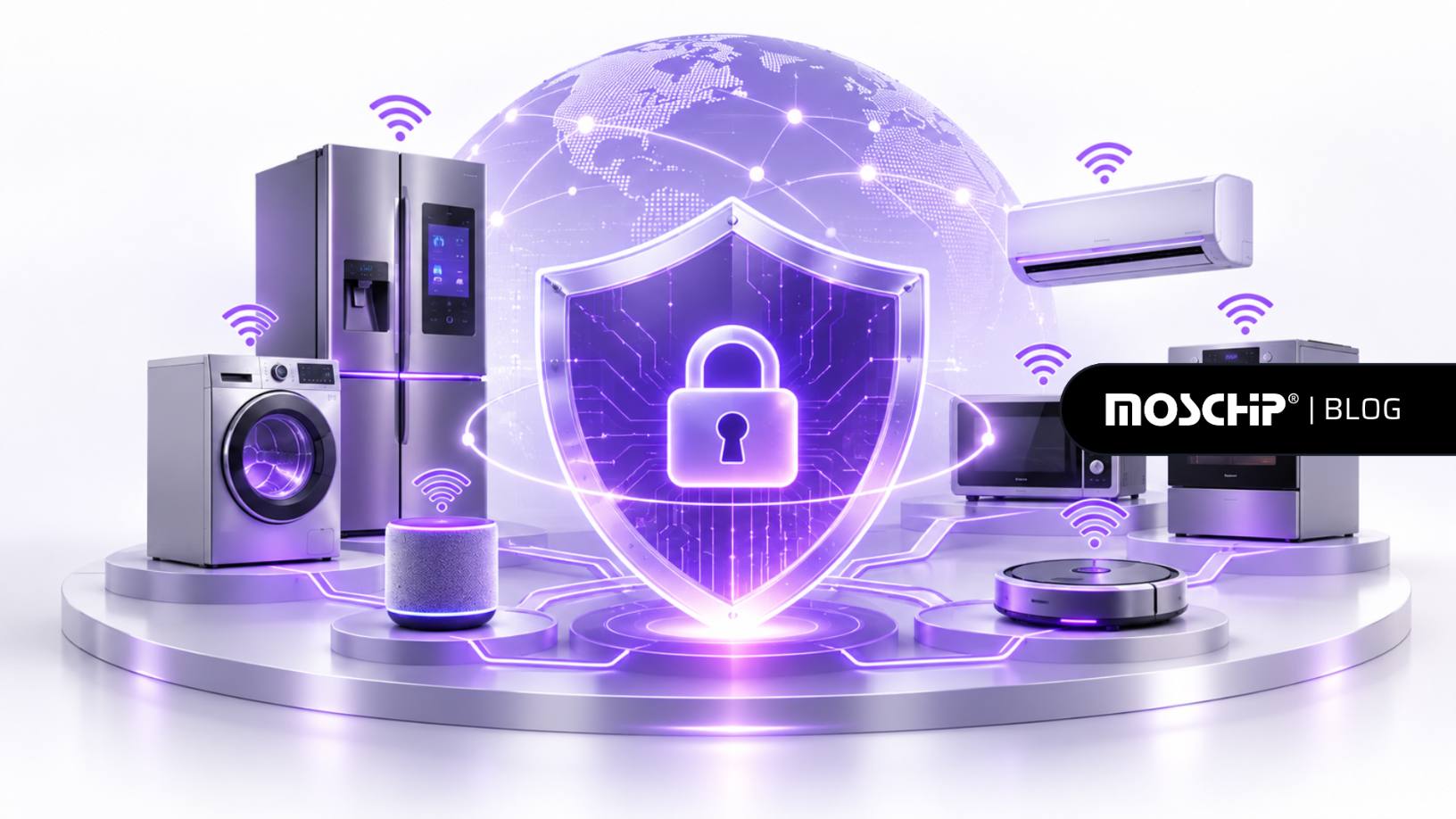
Connected appliances depend on various components such as hardware, embedded software, communication channels/interfaces, mobile applications, and cloud platforms. For connected appliances, all these parts must work together to provide seamless, connected features and remote access for various functions.
But this creates new security challenges for manufacturers. When any security bug found in connected appliance, that put entire product in risk. Attackers can gain access to appliance application controls, causing work interruptions, or affect the services produced by these devices.
The same issue can be detected with connected cameras, industrial equipment, and other software-based products. Here, manufacturers need to think about strengthening security features, and it must remain sustained throughout the product lifecycle.
This is where the European Union’s Cyber Resilience Act (CRA) plays a key role in strengthening connected appliance security.
Why did the EU introduce the Cyber Resilience Act?
The CRA wasn’t created to respond to these attacks, but they highlighted some sort of security risks which needs to be attended and addressed.
In recent times, various connected appliances are dependent on various components such as hardware, operating systems, software libraries, mobile apps, and cloud services. But the whole product can be at risk if any part mentioned above in the product development faces any kind of security issues.
Every time, security cannot receive the same attention as features, performance, or launch deadlines. That’s why some products reach consumers with insecure security patches, update limitations, or without proper reporting for vulnerability fixes. This is where consumers may get stuck in between while they face such cybersecurity issues and can’t get proper support after they purchase the devices.
To mitigate such gaps, the EU adopted the Cyber Resilience Act (Regulation (EU) 2024/2847), which makes cybersecurity requirements mandatory for digital products placed on the EU market.
So, what kind of change is expected of manufacturers?
Security must be built into the product design and development phase; it also needs to be maintained during ongoing use and guide its support after launch.
Let us see first, what kind of CRA expectations from manufactures.
What does the CRA expect from manufacturers?
We have a complete understanding of Cyber Resilience Act compliance.
We have seen that this is not just a security compliance; it is a holistic practice for improving the connected appliance experience. Under this, the product must run smoothly without being affected by change and keep its cybersecurity features steady.
This must cover some of the essential aspects from the product’s security standpoint in three steps: initial configuration, at the time of product launch (time of quality checks), and post-product launch (in terms of product sustenance).
This is where CRA has some major expectations from the manufacturers to keep pace with the product’s seamless experience.
Let us look into what the main expectations are:
- Security by Design and Default: Here the product must be built on rugged security parameters where product development lifecycle must cover security upgrades.
- Protection against Cyber Threats: Here are some steps that must be followed by manufacturers during the time of production, such as restrictions on unauthorized access, data visibility, and unnecessary changes that might affect the product’s security and integrity.
- Vulnerability Handling: This is the process where manufacturers can set up detection schedules, evaluate, and apply relevant mitigation techniques to sustain product lifespan.
- Security Update and Support: This expectation is about providing constant security updates during the product’s in-use period and product sustenance period.
- Incident and Vulnerability Reporting: This is the reporting expectation, where manufacturers get reports about certain major security incidents or vulnerabilities within the pre-defined timelines.
- Transparency: This expectation is about delivering all required information regarding the product security and the support period to the users.
We understand various EU CRA compliance requirements and their expectations, but the main question hangs in the air from users’ end:
What type of product categories need to be supported for the CRA?
CRA compliance mainly applies to a wide range of hardware- and software-based products, especially digital elements like connected appliances, IoT devices, industrial connected equipment, and software applications.
If a manufacturer develops products based on some specific EU sectoral regulations from the starting phase, then it can be excluded from such provisions.
These expectations mainly apply in a staged manner (step-by-step) throughout the product lifecycle, where there is no compulsion to meet every CRA requirement (expectation) at the same time from manufacturers for any connected appliance.
Let’s look at when each requirement comes into effect.
What are the CRA Changes for Product Manufacturers?
As we have seen, the CRA is implemented in the phases of product development as an integral part now that it is forcibly implemented; so, security is not just a simple task to implement during production.
It needs to be considered along with functionality, performance, power consumption, and reliability of the product.
Let us consider the case of a refrigerator. Its mobile application may have a strong authentication feature, but only authentication of device cannot secure the product. This requires more than that.
So, the question is: What more is needed?
It requires the controller, firmware, communication interfaces, and remote management platform also.
But the security of the overall product might get hampered if one of the components is compromised.
For manufacturers, CRA can be applied to how products are designed, built, tested, and maintained. Let us look at how Cyber Resilience Act changes for product manufacturers:
1. Bring Security into Product Architecture
This is a very basic stage where manufacturers address security issues during the design of the product, which makes their task easier before it gets launched. This is the window where manufacturers can identify the possible threats early and understand how it impacted and on which component it impacted.
And then they start tracing the various components’ communication, data exchange methods, and control of product functions.
But manufacturers raise some questions before starting to investigate the functionalities of various components:
For example, does every component really need access to the same system functions?
Should a remote service be able to change critical appliance settings without additional checks?
These questions can help engineers to define the access controls, secure communication paths, and the difference between critical and non-critical functions. This also helps manufacturers in the selection process of hardware, operating systems, communication protocols, and third-party software.
Making the right choices at the architecture stage creates a strong foundation for the following product parts.
2. Protect Firmware, Software, and Communication Interfaces
We have seen that the architecture is defined appropriately; now manufacturers must focus on its internal part: software.
As we are talking about the software, one thing we must know is: what kinds of components are required to build a successful connected appliance?
There are some components, such as firmware, which is required to control the hardware functions; also, a relevant operating system is required to manage system resources and essential data. Apart from these, there are various interfaces that connect with mobile applications, cloud platforms, or other connected devices. These functional parts all have their own security boundaries.
Let us see what kind of software techniques are required to build a safe software layer.
- Secure boot: This helps manufacturers ensure that the device is running on trusted software.
- Firmware integrity checks: This technique can detect unauthorized changes or updates.
- Authentication and Encryption: This is required for having secure communication between services and various devices.
These techniques not only help during the time of the production, it also helps once the product launch in the market. Because manufacturers cannot fully trust that the device is secure.
In many cases, devices get trapped in cyber-attacks once they start running in the market, such as software hacks, phishing, etc. Various software components create various vulnerabilities. Also, third-party security updates may be delayed for a long time after launch.
So, this impacts component visibility and vulnerability management, and it becomes important to look into it as a priority in initial security implementation.
3. Keep Track of Vulnerabilities and Third-Party Components
Once we understand how software, firmware, and communication interfaces are protected. But most of the manufacturers do not develop each software component used in the connected products.
Now the question is: Why?
Because they are highly dependent on open-source packages, operating system components, software libraries, and modules that are supplied by various technology partners.
So, this creates the practical challenge: If a vulnerability is found in one of these components, how manufacturers can detect which part gets affected and how to trace it?
Here, the Software Bill of Materials (SBOM) helps to answer this question. SBOM provides an inventory of software components and dependencies; it also gives engineering teams a proper picture of what is included in the product.
By using such information, engineering teams can check whether the software can be affected by reported vulnerabilities, monitor the level of risk, and decide what type of action is required.
Also, they can plan whether the component needs to be fixed, requires changing the entire piece, or requires applying another suitable mitigation.
Manufacturers must ensure that any part they change or replace remains reliable and won’t affect the rest of the product already in use.
4. Make Security Updates Reliable
As we discussed last time, changing or replacing any component should not affect reliability.
But we know security reliability is the key factor nowadays for any connected products. When manufacturers add new firmware or software updates in the device environment, it improves the logic. This helps reduce security risks. It may require changes to existing connected devices to improve performance and reliability.
Here is one thing manufacturers must focus on: they should not trust sources without checking security references. Check the real source of information. Check the authenticity of the device. Check the trustworthiness of the source. Can the manufacturer install it without affecting the regular operations?)
To check all these essential factors, manufacturers come up with an important question:
What are those essential elements that need to be together to make this procedure easy for manufacturers?
There are several elements, such as authenticated over-the-air (OTA) updates, encrypted delivery, firmware verification, and recovery techniques, which enhance the security update procedure.
Let us understand it practically: what happens if this update is interrupted in the middle?
If the manufacturer doesn’t have an authenticated source of recovery architecture. In this situation, the original application data cannot be restored by the manufacturer. So, rollback options, recovery schedules/time frames, and validation updates become important during production.
Also, along with these, patch delivery is important, which is about ensuring the manufacturers that their product is safe and secure and will have long-term support even if bearing changes.
5. Continue Supporting Products After Launch
As we have seen, product security is an essential and integral feature for any product development; the story is not ending once the product is moved out of the factory.
New challenges still wait in the form of software dependency instability; the form of threats can change while the product is in use.
Manufacturers continuously monitor security issues, their impact on assets, bug-fix releases, and communication-related information to the users. Manufacturers also need to provide security support for long-term use.
This involves coordination between manufacturing and the supply chain. If a hardware vendor, software provider, or cloud service partner detects any type of vulnerability, the product manufacturer needs to understand the issue raised and its impact intensity, whether it will affect the whole finished product, and which source is responsible for that.
By combining all these responsibilities make the security as a continuation part for the product engineering.
But here is the catch: this raises one practical question: how can manufacturers bring all these activities together across hardware, firmware, software, and cloud-connected systems?
Implementing CRA Requirements Through Product Engineering
The challenge is not to integrate the CRA into the product; the main challenge is how manufacturers can bring all these security activities together during product development.
This basically starts with understanding the different parts of the product that work together.
For example, consider the manufacturer detecting a security vulnerability in any of the third-party software libraries used in its connected appliances; the engineering teams first need to check whether the product uses the library and whether any vulnerability impacts the product functionality or security.
Simple security patch updates or code change is not enough while fixture is required.
The new software has to remain compatible with the existing firmware and hardware, and it should be tested to make sure other product functions still work as expected. Once it’s been validated, the update must be sent securely to appliances already in use.
Manufacturers must take security very seriously in product engineering.
How?
There are different levels of the system such as, hardware, firmware, software, connectivity, and cloud services must be covered in proper detail to mitigate various security threats. Some of the key activities include:
- Secure Architecture and Development: This level is to identify the possible threats early and includes access control, interface security, and requirements for security during the product design.
- Platform and Firmware Security: This level is to implement secure boot, firmware integrity checking, secure storage, and secure communication between different parts of the product.
- Security Testing: This level is to perform code reviews, security scanning, penetration testing, and fuzz testing to detect weaknesses both before and after the product launch.
- Software Component Management: In this level, manufacturers regularly need to review and maintain SBOM certifications and check whether newly third-party software components have new vulnerabilities.
- Secure Update Engineering: Create authenticated OTA updates, check the integrity of package updates, and include suitable options for rollback or recovery if the update fails.
- Ongoing Security Maintenance: This level requires monitoring vulnerabilities, detecting problems and fixing them, and managing various security incidents, and also keep track on it and updates throughout the product support lifespan.
So, all these activities must work simultaneously. For example, boot depends on the bootloader, firmware, and update mechanism working properly. Similarly, if we are looking to fix any software vulnerabilities that require correct testing and update components with real hardware and software configuration.
But manufacturers still face an issue when they handle each part/component separately.
This is where they first need to understand the complete product overview, its working chronology, and the changes adopted in one component and their impact on others.
This understanding can be clearer when they engage in such connected and one-stop-shop solution support.
How MosChip Supports Connected Product Engineering?
To bring CRA expectations into products that can be feasible when manufacturers start product design, development, and maintenance together, as we discussed above.
This is where MosChip comes in. We bring our hardware, software, and cybersecurity expertise together. Here, one thing to be underlined is that manufacturers will be responsible for their CRA compliance, as we help them to design and develop the product with security capabilities and support the products lifecycle.
On the hardware side, our Hardware and System Engineering services include secure boot, multi-layer board design, bring-up, validation, pre-compliance testing, and turnkey delivery; we also support obsolescence management and the product’s entire lifecycle (long-term sustenance).
Whereas MosChip also enables hardware-backed security through Hardware Root of Trust (Hardware RoT), cryptographic key management, and help engineers to ensure firmware authenticity and protection for connected products.
On the other hand, our Device Software Engineering services help manufacturers to establish essential security capabilities such as, hardware root of trust, TPM, TEE, secure boot, and OTA updates with connectivity stacks like BLE, Wi-Fi, and Zigbee.
In addition to this, for a stronger security environment for connected appliances, MoChip brings Digital Engineering services: VAPT, incident response, and security analytics (SAVP), OWASP Top 10 recommendations, and vulnerability remediation.
Wrap Up: Building Connected Products with Security in Mind
Ultimately, after all the discussion about CRA, one thing is clear: the job of various manufacturing organizations doesn’t stop once the product launches. Manufacturers must consider all factors during manufacturing, such as design, updates, and support, throughout the product’s life.
Once the product is in use, the major part to be taken into consideration is security.
Security is a part of daily engineering decisions, which is essential to create and deploy products into the right environment and is essential to the development of products that customers can put their trust in.
To know more about MosChip’s capabilities, drop us a line, and our team will get back to you.
FAQs
The Cyber Resilience Act (CRA) is an EU regulation that sets mandatory cybersecurity requirements for products with digital elements placed on the European market. It aims to improve product security through secure design, vulnerability management, security updates, and greater manufacturer accountability.
The CRA covers a wide range of hardware and software products with digital elements, including smart home appliances, connected devices, IoT products, industrial equipment, operating systems, and software applications. Some products covered by specific EU sectoral regulations are excluded or subject to different requirements.
The CRA requires manufacturers to address security by design and default, protect products against unauthorized access, identify and manage vulnerabilities, provide security updates, and report certain actively exploited vulnerabilities and severe security incidents. It also requires manufacturers to provide relevant security information to users.
Product engineering helps manufacturers build security into hardware, firmware, software, and connectivity layers. Practices such as secure boot, authenticated OTA updates, vulnerability assessments, SBOM management, penetration testing, and ongoing security maintenance can help address CRA requirements throughout a product’s lifecycle.
Share this article on:
-
 View other Blogs
Darshil is a Marketing professional at MosChip creating impactful techno-commercial writeups and conducting extensive market research to promote businesses on various platforms. He has been a passionate marketer for more than four years and is constantly looking for new endeavors to take on. When He’s not working, Darshil can be found reading and playing guitar.