ProductXcelerate™ Blueprint · Smart Home & Consumer Electronics OEMs

Matter-ready. Mesh-resilient. Your smart home bridge, minus the protocol R&D.

A pre-validated Matter-ready bridge reference design with secure onboarding, protocol bridging, and self-healing mesh networking, engineered for your product line and ecosystem.

Infineon PSoC6

Dual-core, ultra-low power

Matter-ready

Firmware architecture

Wi-Fi + BT 5.0

Murata combo module
Product maturity path Physical Functional Connected Cognitive Agentic
Why This Exists

The smart home rewarded whoever shipped reliably. Most bridges don't.

For appliance brands, hub makers, and service providers, the bridge is where the brand promise gets kept.

Matter raised the bar, not lowered the work

Matter-readiness, legacy protocol bridging, and certification create a multi-year firmware effort. It’s the kind of undifferentiated engineering that stalls the products customers actually see.

Mesh failures become support tickets

A dropped node or a botched OTA turns into a one-star review and a returned unit. Recovery workflows and update lifecycle are the product, not a feature.

Dumb bridges get commoditized

A box that only forwards packets competes on price forever. Adaptive automation that learns household routines is what keeps users inside your ecosystem.

The Blueprint

The bridge is the product. It's engineered like one.

Every smart home product line eventually rediscovers the same truth. The bridge determines whether your brand feels dependable or flaky. It onboards devices, keeps the mesh alive, and delivers updates without bricking devices. This blueprint front-loads that engineering foundation on a dual-core architecture designed for products that stay plugged in for years.

Home Automation Bridge Blueprint — Reference Configuration

PXB · HOME-BRIDGE

Hardware & EmbeddedPre-validated

The physical and firmware foundation: boards, BSPs, secure OTA, device management.

  • Processor Infineon PSoC6: 150 MHz M4 + 100 MHz M0+
  • Memory 512-Mbit QSPI NOR + 4-Mbit F-RAM; 2 MB flash, 1 MB SRAM
  • Wireless Murata CYW43012: Wi-Fi 2.4/5 GHz + BT 5.0
  • I/O CapSense, 13 SCBs (I²C/SPI/UART), USB host/device, microSD
  • Power 1.8–3.3 V board range
  • Enclosure Compact, low-power, Matter-ready design

DigitalSky GenAIoT™Pre-validated

DigitalSky connectivity, cognition, and automation pipelines - validated with CI/test artifacts.

  • Lifecycle Secure onboarding, OTA, recovery workflows
  • Cognitive Suite Adaptive user-behavior automation models
  • Automation Regression + OTA test bots, continuous validation
  • Dashboards Usage, energy efficiency, anomaly views

AgenticSky™Accelerator

Goal-driven, self-healing behaviors - integrated and validated for your product during the engagement.

  • ControllerCore Mesh rerouting and fault recovery
  • Adaptive automation
  • Proactive network optimization
Use cases

Adaptable by design: hardware interfaces, software stacks, and AI models are tailored to your product while the pre-tested foundation stays intactdrawing on 100+ pre-trained, domain-aligned AI models to cut experimentation cost and model risk.

What It Powers

The next generation of connected home products this base unlocks

One validated bridge coreembedded by appliance brands, hub makers, service providers, and startups wherever the brand meets the home.

Appliance brands

Matter-enable existing product lines

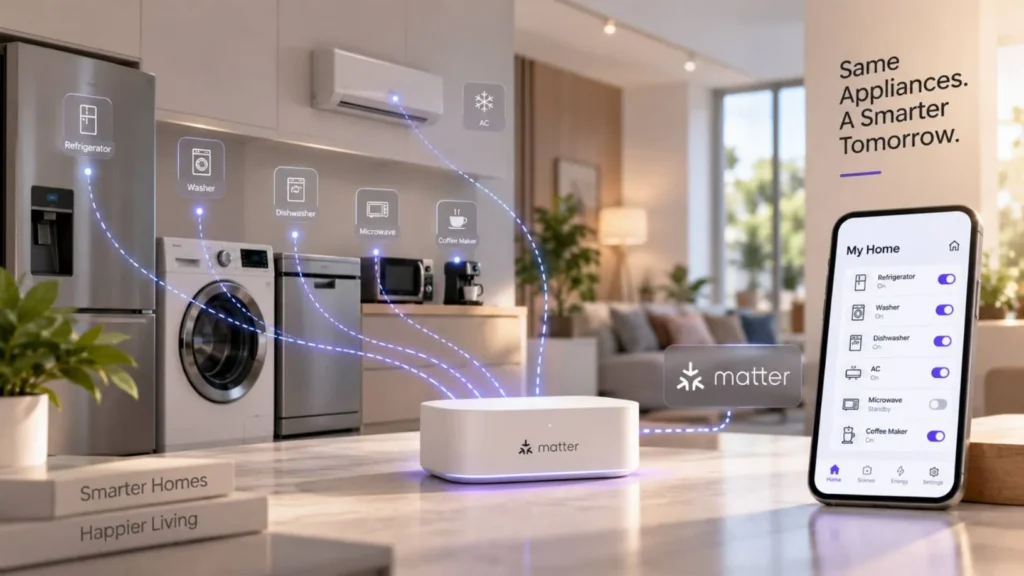
A bridge that brings legacy appliance fleets into Matter ecosystems - protecting installed-base loyalty without redesigning every SKU.
Hub & panel makers

Self-healing home hubs

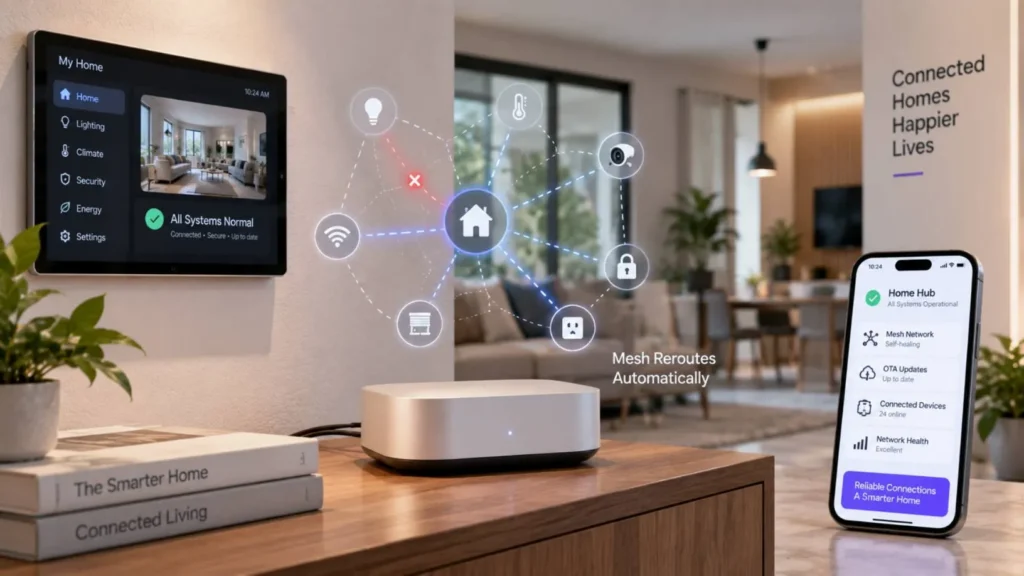
Hubs whose mesh reroutes around failures and whose OTA never bricks a unit - reliability as the visible differentiator.
Service providers

Operator-branded smart home gateways

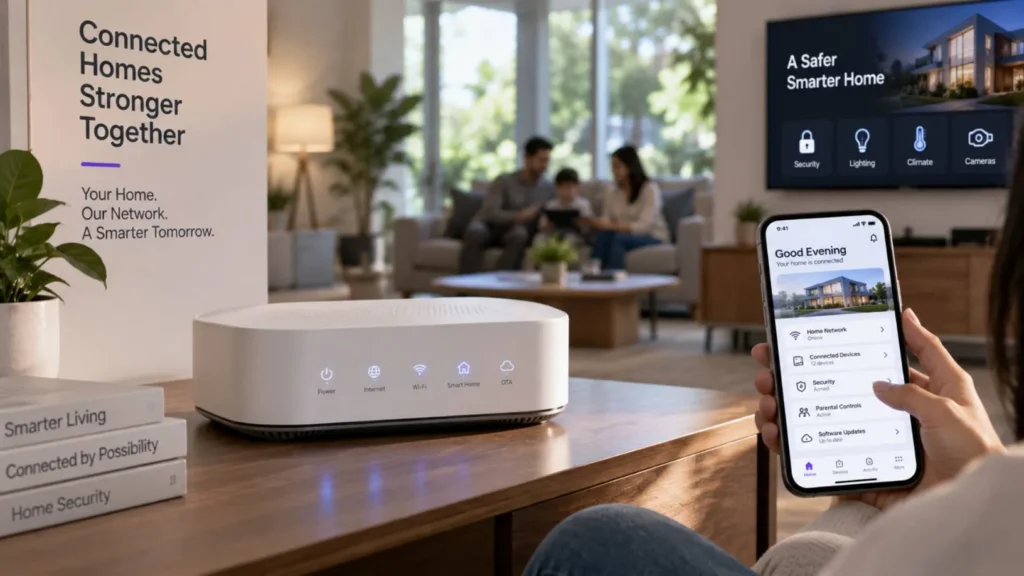
ISPs and security providers ship branded bridges with unified onboarding, fleet OTA, and usage dashboards - subscription infrastructure, pre-built.
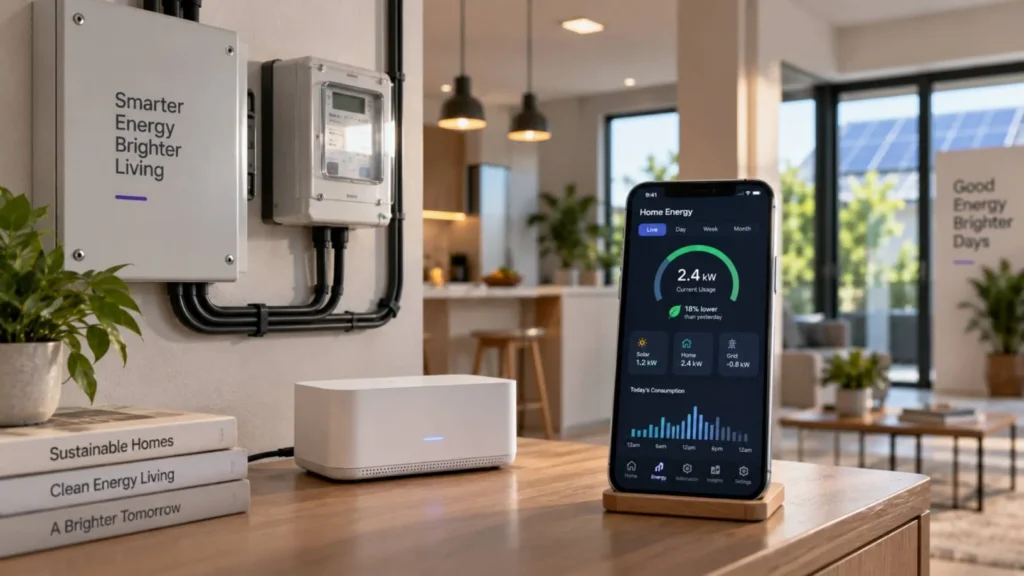
Energy

Home energy management hubs

Bridges that watch consumption patterns, surface efficiency dashboards, and automate load behavior as tariffs and habits shift.
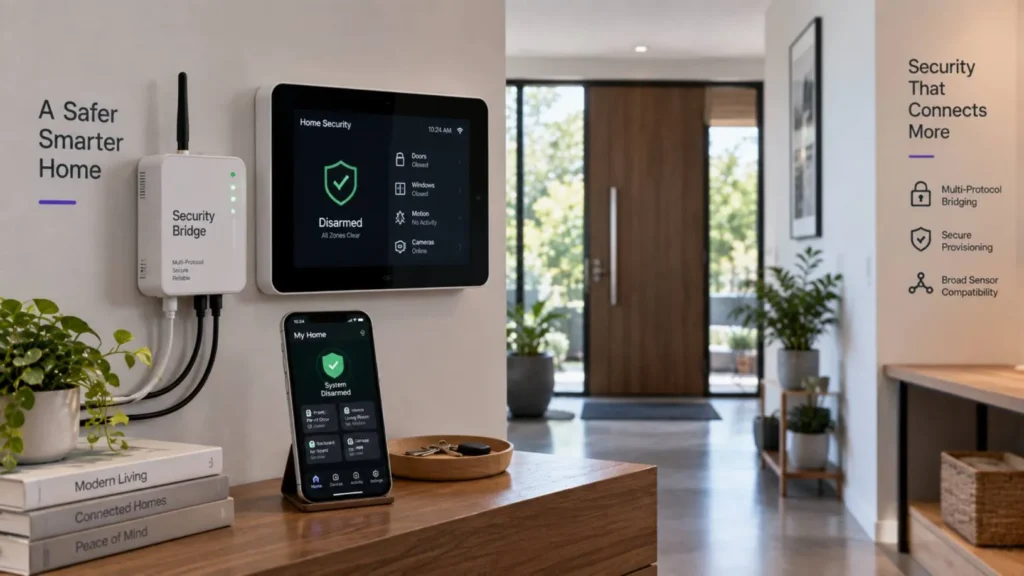
Security

Security panel bridge modules

Multi-protocol bridging with secure provisioning for panels that must talk to sensors from three eras of the industry.
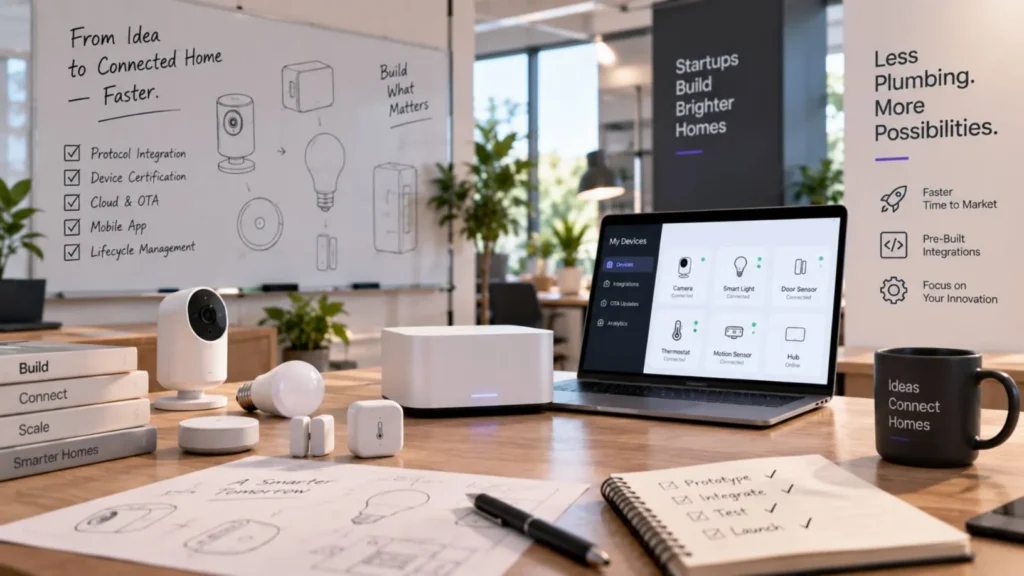
Startups

New-category home devices, faster

Skip the two years of protocol and lifecycle plumbing; spend the runway on the product idea that got you funded.
How Teams Engage

An engagement that ends in production artifacts.

Backed by 25+ years of silicon-to-systems delivery.

Blueprint walkthrough

A working session with MosChip connectivity engineers: your device ecosystem, protocols, and certification targets mapped against the reference design. You leave with a gap analysis and a realistic effort estimate, whether or not you move forward.

Adaptation to your product

Reference hardware and firmware tailored to your enclosure, cloud, and device portfolio. Your differentiating features are yours to define on a pre-validated engineering foundation.

Integration & handoff

Full system integration, adaptive automation validated on your ecosystem’s real usage patterns, Matter and regulatory certification prep, and handover with OTA test automation and sustainment playbooks.

FAQs

Questions automotive teams ask us

What do we own at the end of the engagement?

Everything! Including the adapted hardware design, software, integrated AI models, test suites, and documentation, belongs to your product program. MosChip adapts the reference design to your IP, not the other way around. There are no licensing or capex fees for the blueprints themselves.

We have an existing cloud and app. Does the bridge fit into them?

Yes. Provisioning, telemetry, and device management adapt to your cloud and app rather than forcing a parallel stack, so the bridge extends your ecosystem instead of fragmenting it.

Can we add Thread, Zigbee, or proprietary RF alongside Matter?

The firmware architecture was designed for multi-protocol bridging. Additional radios and protocol stacks are scoped during the blueprint walkthrough and added without disturbing the validated lifecycle core.

How does this actually cut our support costs?

Three mechanisms are built in. OTA with recovery workflows reduces bricked units. Self-healing mesh rerouting reduces connectivity tickets. Continuous regression automation reduces field regressions with every release. Reliability engineering is the support cost strategy.

How quickly can we see something running?

Because the reference design already runs end to end, the first milestone is a working demonstration adapted to your requirements, not a bring-up phase. The blueprint walkthrough gives you a delivery plan tailored to your scope before you commit.

Start the Conversation

Discuss your product roadmap with us.

Tell us what your bridge needs to connect. A MosChip product engineering lead will come back to schedule an architecture review.