ProductXcelerate™ Blueprint · Industrial & Building Automation OEMs
The edge gateway your industrial product line needs - already built, already validated.
A ruggedized, NPU-equipped edge gateway reference design with sensor ingestion, predictive maintenance, and self-healing control already working. Engineered by MosChip for your machines, your buildings, and your protocols.
i.MX 8M Plus + NPU
On-device inference
IO-Link · BACnet
Field & building protocols
IP65 · UPS fallback
Built for the plant floor
Why This Exists
Your customers want intelligent operations. Your gateway roadmap is stuck in bring-up.
Machine builders, BMS vendors, and energy solution providers all face the same gap between what the market asks for and what a gateway program actually takes.
Protocol sprawl eats the schedule
Stitching field protocols to cloud pipelines is a year of engineering before any intelligence ships.
Edge AI that survives the plant floor is hard
Running inference reliably on a gateway in an IP65 box at the back of a mechanical room with UPS fallback and thermal margins is a different problem from a demo on a devkit.
Reactive maintenance is a losing pitch
Products that only report faults after the compressor dies can’t command a premium. Predictive maintenance and energy optimization are now the entry ticket, not the differentiator.
The Blueprint
Where OT meets IT, engineered as one system, not stitched after the fact
The gateway is where field protocols meet cloud pipelines, where inference runs without a data center, and where a 2 a.m. fault either self-recovers or becomes a truck roll. This blueprint was engineered around that reality: ingestion, prediction, and self-healing control validated together and built retrofit-first, because most of your customers’ plants and buildings are brownfield.
Industrial & BMS Edge Gateway Blueprint — Reference Configuration
PXB · IND-BMS-GWHardware & EmbeddedPre-validated
The physical and firmware foundation: boards, BSPs, secure OTA, device management.
- Processor NXP i.MX 8M Plus, quad Cortex-A53 + NPU
- Memory LPDDR4, eMMC
- I/O USB, PCIe, Ethernet, CAN, IO-Link M12
- Wireless Optional LTE/5G, Wi-Fi; BACnet
- Enclosure IP65 aluminium, thermal-optimized
- Power Optimized PMIC with UPS fallback
DigitalSky GenAIoT™Pre-validated
DigitalSky connectivity, cognition, and automation pipelines - validated with CI/test artifacts.
- IoT Suite Secure sensor onboarding, unified mgmt
- Cognitive Suite Energy optimization AI, occupancy prediction
- Automation Report generation, ticket logging bots
- EdgeAI Suite Fire/smoke detection, HVAC anomaly detection
AgenticSky™Accelerator
Goal-driven, self-healing behaviors - integrated and validated for your product during the engagement.
- ControllerCore Self-restoring gateway health, adaptive control
- VisionCore Guides engineers on HVAC faults & schedules
- Flags efficient usage and future risks
Use cases
Adaptable by design: hardware interfaces, software stacks, and AI models are tailored to your product while the pre-tested foundation remains intact, drawing on 100+ pre-trained, domain-aligned AI models to reduce experimentation costs and model risk.
What It Powers
The next generation of industrial and building products this base unlocks
A ruggedized, NPU-equipped platform that accelerates intelligent products across industrial automation, building management, and energy applications.
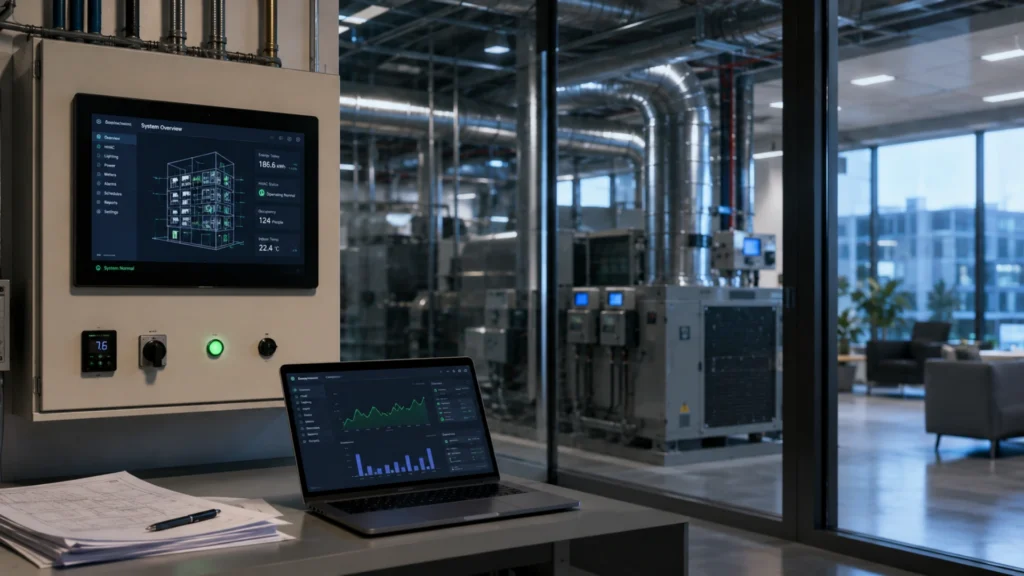
Self-optimizing building controllers
Supervisory controllers that predict occupancy, tune HVAC schedules, and cut energy spend - with agentic guidance for facility engineers built into the product.
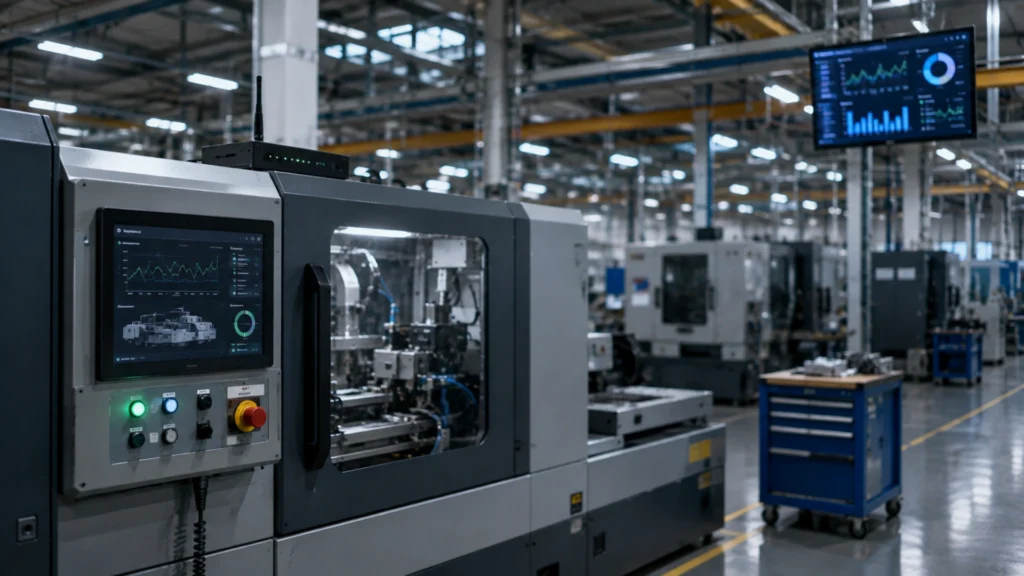
Condition monitoring as a product option
Ship machines with a monitoring gateway that detects anomalies on-device and feeds your service organization - converting warranty risk into recurring service revenue.
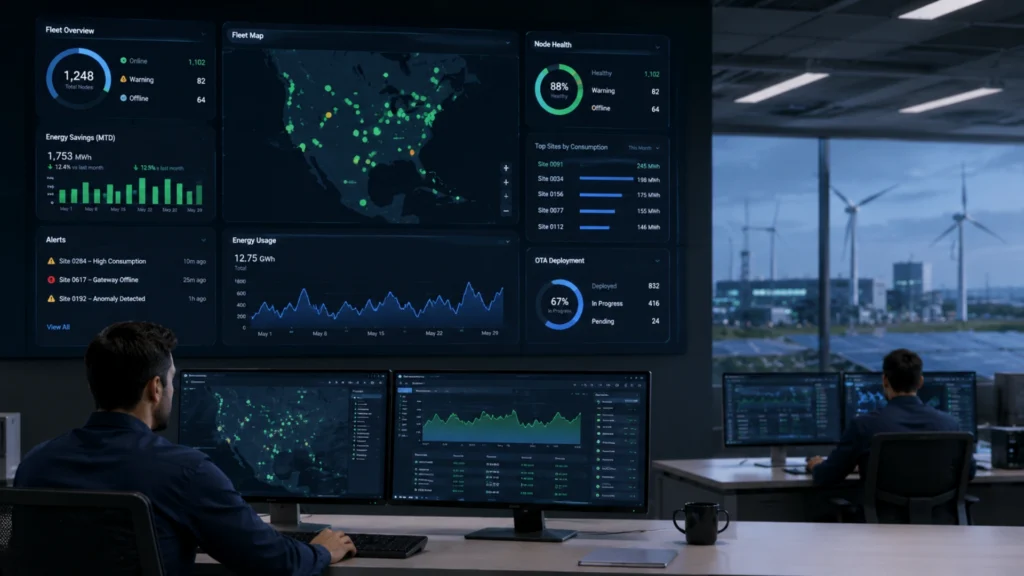
Fleet-managed energy optimization nodes
Deploy and remotely manage gateway fleets across customer sites with unified onboarding, OTA, and energy dashboards out of the blueprint.

Retrofit IO-Link edge masters
Bring brownfield lines into an edge-to-cloud architecture without ripping out fieldbuses - sensor ingestion, anomaly detection, and automated ticketing on one box.
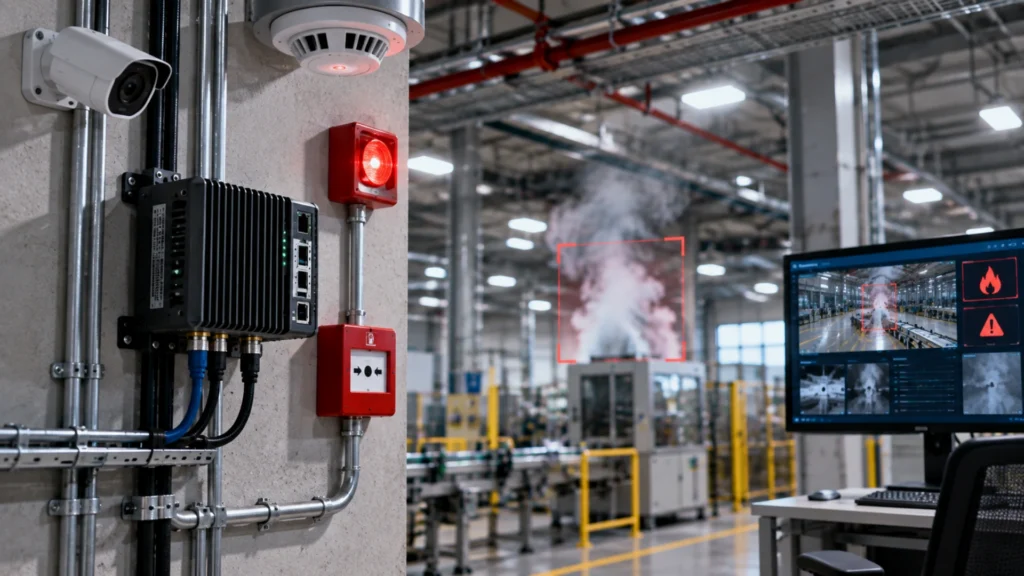
Edge fire/smoke and safety monitoring
On-device detection with pre-validated EdgeAI models, running locally where network dependence isn't acceptable.
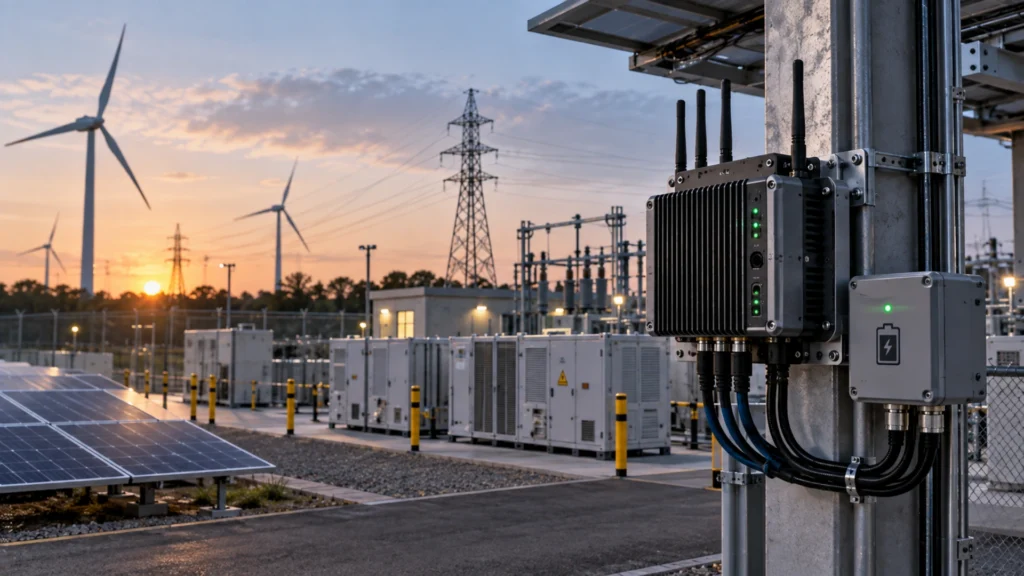
Distributed energy edge nodes
Ruggedized nodes with UPS fallback for sites where the gateway must outlive the outage it's reporting.

How Teams Engage
No license. No blueprint capex. An engagement that ends in production artifacts.
Backed by 25+ years of silicon-to-systems delivery, 1700+ engineers, and 500+ product engineering projects.
Blueprint walkthrough
A working session with MosChip edge engineers: your machines, protocols, and deployment environments mapped against the reference design. You leave with a gap analysis and an honest effort estimate – whether or not you engage.
Adaptation to your product
Reference hardware and software tailored to your I/O, your field protocols, and your cloud – the differentiating layers are yours to define on a foundation that stays validated.
Integration & handoff
Full system integration, validation of the agentic and GenAI accelerators against your operational and compliance profile – with control loops tuned on your equipment’s real data – certification prep, and handover with CI/test suites and sustainment playbooks.
Questions automotive teams ask us
Everything handed over, including the adapted hardware design, software, integrated AI models, test suites, and documentation, belongs to your product program. MosChip adapts the reference design to your IP, not the other way around. There are no licensing or capex fees on the blueprints themselves.
Yes. The protocol layer is one of the most commonly tailored parts of the blueprint. Modbus, OPC UA, proprietary fieldbus, or serial legacy protocols can be addressed. The walkthrough maps your protocol landscape and scopes the adaptation precisely.
The pre trained, domain aligned models are the starting point, not the end state. During integration, they are adapted and validated on your equipment’s data. This is what turns generic anomaly detection into predictions your service team will actually trust.
The blueprint assumes it. On device NPU inference, UPS fallback power design, and self restoring gateway health were engineered for sites where connectivity is sometimes unavailable. The intelligence keeps working when the backhaul doesn’t.
Because the reference design already runs end to end, the first milestone is a working demonstration adapted to your requirements, not a bring up phase. The blueprint walkthrough gives you a delivery plan for your specific scope before you commit.
Start the Conversation
Put your edge architecture in front of the engineers who built this.
Tell us about the machines, buildings, protocols, and intelligence you need to support. A MosChip product engineering lead will help map your requirements to the blueprint and identify the right path forward.